Showing posts with label co parenting. Show all posts

Monday, May 14, 2007

Child of divorce wants to choose where he lives

This article is too great not to pass on...

Q What are your thoughts on split custody of two siblings?
Eight months ago, the son asked to move in with the father. Now he's asking to move back to his mom's house. He's 11.

His reasons for wanting to return are to see his mom and his 6-year-old sister more; to have friends, because he has made no new ones in his current school or neighborhood; and he doesn't like the fact that no one is there when he gets home from school.

His dad doesn't want him to go back, but I think the son is very lonely. He mentioned in passing that he moved in with his father because he didn't want his dad to be lonely. The divorce was four years ago. His mom has remarried, and his dad just recently started dating.

Is it a good idea to let a child select where he wants to live? Is it hurtful to separate siblings? Should the dad get to decide where the child lives? Would a family counselor be a good idea to sort through the issues?

A Who decides where a minor child lives after a divorce? Sometimes a judge decides; sometimes the decision is made by mediation. Sometimes the parents fight over where the child will live. Sometimes the child has input, sometimes not.

What's best for the child? Two parents who love the child, understand the child's needs, realize the impact that divorce has on a child, and communicate well so that they can work together continuously on what's best for the children as they grow and develop.

I'm guessing that the person who wrote today's letter is a grandparent. I infer that the parents are not paying much attention to their child and don't communicate well. I also infer that the boy asked to leave about the time mom got married. Mom now had a husband and two kids, while dad had no one. I find it interesting and disquieting that some children of divorce end up taking care of their parents instead of the other way around.

To answer your questions, splitting two siblings is not a good idea. There are enough other changes going on in the children's lives at the time of a divorce. As for an 11-year-old deciding where he wants to live, if a custody fight came before the court, most judges would ask the child — or have the child and both homes evaluated — before making a final decision.

Your letter points out a major pitfall in letting the child decide. It was noble of the boy to want to take care of his father, but he's too young to take on such a task. Depending on what the custody arrangements are, dad doesn't have the sole right to decide.

Family counseling would be a great idea if all parties, including the mother's new husband, are willing, and are all in a mode of "I want what's best for the kids." Individual counseling for the boy could help him realize that he's the kid and he deserves friends and stability in his life, even if dad is lonely.

Finally, it's fortunate that most children are resilient, because so many parents today have it backward. They put themselves first — before the kids. Some children of divorce never quite get over it. I recently heard a man in his 60s mention it was the 50th anniversary of his parents' divorce. He remembered the exact day.

I realize that not every couple can or wants to follow these rules, but here are Dr. Heins' rules for protecting children from the effects of divorce:

● Don't get married unless you expect to spend the rest of your life married to this person.
● Don't have children unless they will be able to spend their entire childhood in the two-parent family you created.
● Don't get divorced unless you're comfortable with the idea that your kids might spend their entire lives remembering a divorce anniversary and its impact.

Thursday, March 01, 2007

Visitation Guidelines - Flexible or Not?

Having never been in the position of having to worry about such things, I am finding myself a bit baffled on this topic.

Granted, I understand that visitations are set by courts when two parents can't get along. Here's the confusing part:

I want to know is what happens when one parent forgos their weekend. Do they pick up the following weekend or do they forfeit that visit altogether?


I'm sure there are others out there besides me who don't understand these 'rules' of divorce.

I've always let my children make their own decisions on whether or not to have visitation time with their father and we've never had a problem whatsoever.

But, I guess that comes with the territory when you have an amicable divorce. It hasn't always been this way, it's just what it's evolved in to.

Tuesday, February 13, 2007

Letting Go of Conflict after a Difficult Divorce

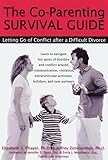
The Co-Parenting Survival Guide: Letting Go of Conflict after a Difficult Divorce

The Co-Parenting Survival Guide: Letting Go of Conflict after a Difficult Divorce

One readers review:

I went through a high-conflict divorce in Connecticut in 2004, complete with restraining orders, police, and the whole 9 yards. As I saw the divorce approaching, I researched a great deal of divorce/parenting literature on my own, hoping to find a framework of something my (soon-to-be) ex and I could agree to work with, and I found this book. I read it and gave a copy to my ex. I also found an divorce/custody attorney who would focus on our children's interests, and his very first recommendation was to get this book and see Dr. Thayer in her practice jointly with my ex.

I'm grateful I had the expertise of Dr. Thayer to help me let go of conflicts I had with my ex. The guiding principle of the book and her joint practice (which is called The Peace Program) is to transform a personal, contentious relationship with an ex into a business-like relationship focused on the children's welfare. In a high-conflict divorce, this is a very difficult objective -- conflict can be blinding and all-consuming -- but it is possible, and the energy is of course better spent on the children.

The book outlines suggestions to facilitate parenting business, such as a weekly parenting phone call (a business call) and a dozen Golden Parenting Rules. In the end, after the parents extinguish their fighting, the children get their parents back, and a good deal of their childhood back, because the parents choose to work together as co-parents. Through the 18 months I've been using this book, I find myself living in various chapters of it, depending on the evolution of my divorce. As the children get older, new issues arise, and the book remains on the top shelf of my bookshelf, where my most useful books reside.

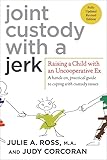
Joint Custody with a Jerk

Joint Custody with a Jerk: Raising a Child with an Uncooperative Ex, A Hands on, practical guide to coping with custody issues that arise with an uncooperative ex-spouse

Joint Custody with a Jerk: Raising a Child with an Uncooperative Ex, A Hands on, practical guide to coping with custody issues that arise with an uncooperative ex-spouse

One readers review:

I personally think everyone regardless of their status should read this book. It's a great communication tool. Very quick read; simple; easy to read and understand. Personally I've found it to be a great help in dealing with many different situations, especially in times of conflict, that have almost impossible or non-existant positive communication.

This book makes it simple and easy to understand just how powerful taking responsibility for ones own issues and communication can be. It gives the reader a clear and concise way to gain control over themselves and their communication and hand back to the other party that which does not belong to the reader. I've bought this book for many of my friends and they have all felt like it was a valuable read not only when dealing with an ex-spouse, but also in many other situations where one finds ones self dealing with conflict.

If you have a comment regarding this book, I'd love to have you share your thoughts.